Gone Quiet: What Really Happens to Fans When Their Favorite Celebrity Disappears From the Internet

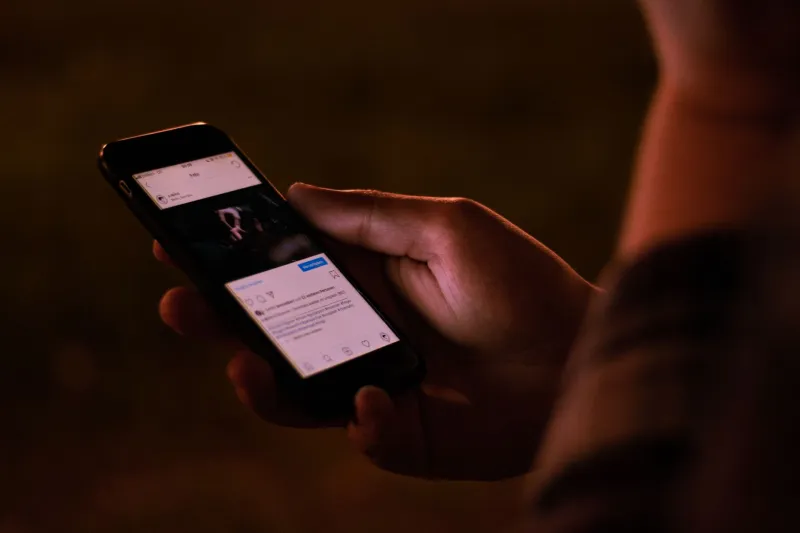
It starts with a small thing. You open Instagram on a Tuesday morning, like you always do, and scroll to the account you've followed for three years. No new post. Fine. You check again Wednesday. Nothing. By Friday, you've refreshed the page four times and quietly Googled the person's name just to make sure they're okay.
You're not alone, and you're not weird. But you might want to sit down, because what you're experiencing has a name — and it's messier than most people want to acknowledge.
The Relationship That Wasn't (And Also Kind of Was)
Parasocial relationships — the one-sided emotional bonds fans form with public figures — have been studied since the 1950s, when sociologists Donald Horton and Richard Wohl first noticed that TV audiences were treating on-screen personalities like personal friends. What nobody anticipated was what would happen when those personalities gained the ability to talk back — or at least, to create the convincing illusion that they were.
Social media changed the whole game. Celebrities posting unfiltered selfies, answering fan questions in Stories, sharing mundane details about their lunch or their bad days — all of it manufactured an intimacy that felt genuinely reciprocal. Fans weren't just watching anymore. They were participating. They were tagging, commenting, getting the occasional reply. That reply, however brief, becomes a memory people hold onto.
So when the posting stops, the silence doesn't feel neutral. It feels personal.
"There's a real neurological basis for this," says one therapist who works with young adults and asked to remain unnamed due to client confidentiality. "The brain doesn't cleanly distinguish between parasocial and real relationships the way we'd like to think it does. Loss is loss. Absence triggers absence."
What 'Going Dark' Actually Does to an Audience
Celebrities go quiet for all kinds of reasons. Mental health breaks. Contract disputes. PR crises where silence is the strategy. Personal tragedies. Sometimes it's a calculated move by a management team. Sometimes it's a person who is genuinely struggling and just needs to step away.
The audience rarely knows which one it is — and that ambiguity is its own particular kind of torture.
Fan forums light up almost immediately when a major account goes inactive. Theories multiply fast: She's in rehab. He's having a breakdown. They're pregnant. Something happened on set. The speculation isn't malicious most of the time. It's anxiety looking for an exit. When the person you've been emotionally tracking for years suddenly vanishes from your daily scroll, your brain wants an explanation.
Reddit threads dedicated to specific celebrities have entire taxonomies for this phenomenon. Users track post frequency, analyze the last caption for hidden meaning, compare timestamps across different platforms to see if the silence is universal or selective. It's detective work driven entirely by emotional investment.
"I knew it was a lot," admits one 24-year-old from Ohio who's been following a particular pop artist since middle school. "But I'd wake up and check her account before I checked my texts. When she went dark for six weeks last year, I genuinely felt anxious. Like something was wrong in my life, not just hers."
The Platform Angle Nobody's Talking About
Here's where things get interesting — and a little uncomfortable. Absence, it turns out, is extremely good for engagement.
When a high-profile account goes silent and then returns, the comeback post routinely outperforms anything that account was posting during its active streak. Algorithms reward the flood of interaction that follows a return: the comments, the shares, the "FINALLY" replies, the news articles written about the comeback. Platforms aren't passive bystanders in this cycle. They benefit from it.
There's also the matter of what absence does to the remaining content. When someone stops posting, fans loop back through their old material obsessively. View counts on older videos climb. Archived posts get screenshotted and recirculated. The content machine keeps running even when the creator has stepped away from it, because the audience fills the vacuum with its own energy.
Some PR professionals — who also declined to be named — acknowledge that strategic silence is a real tool. "A well-timed disappearance followed by a carefully staged return can reset a narrative completely," one noted. "Absence creates longing. Longing creates attention. Attention is the whole game."
The fans experiencing genuine emotional distress during these silences would probably not love knowing that their grief can be, in some cases, a feature rather than a bug.
When It Ends Without Ending
The truly strange version of this is when a celebrity doesn't come back. They don't announce a hiatus. They don't post a goodbye. They just... stop. The account stays up, a preserved artifact, but nothing new arrives. For fans, this creates a particular kind of unresolved grief — the relationship has ended, but there was no ending.
Therapists compare it to ambiguous loss, a concept developed by psychologist Pauline Boss to describe mourning someone who is physically absent but psychologically present, or vice versa. The celebrity is still there in every practical sense. You can still scroll their old posts. Their face is still on your playlist. But the living, updating version of them — the one you were in a relationship with — is gone.
"Closure requires a clear signal," the therapist explains. "When that signal never comes, people can stay stuck in a kind of waiting mode for a surprisingly long time."
What Fans Are Actually Grieving
Maybe the most honest thing to say about all of this is that fans aren't just grieving the celebrity. They're grieving the version of themselves that existed inside that relationship.
For a lot of people — especially younger fans, or people going through isolating life circumstances — a parasocial relationship with a celebrity fills real emotional space. It provides routine, comfort, something to look forward to. The daily check-in becomes a ritual. The celebrity's wins feel like shared victories. Their vulnerability feels like trust extended.
When that disappears, what's lost isn't just content. It's a structure. A small but consistent source of feeling connected to something.
None of that makes the relationship fake, exactly. But it does make the ending complicated in ways that are hard to explain to people who haven't experienced it — especially in a culture that still treats celebrity fandom as something to be embarrassed about rather than understood.
The Awkward Takeaway
Social media platforms built their entire business model on making parasocial bonds feel real, then gave celebrities the ability to vanish without warning or explanation. Fans got handed all the emotional risk with none of the reciprocity.
That's not a small thing. And the fact that algorithms quietly profit from the fallout makes it feel even less okay.
If you've ever felt genuinely gutted when someone you follow went silent — you're not being dramatic. You're responding exactly the way you were designed to respond. The system just didn't bother to mention that part upfront.